
I’ve been dancing salsa for a little over two years and taking tango lessons for the last month; I can’t imagine my life without dancing. I’ve lived my life with few regrets but if were to live it again, I’d have learned latin dance many decades ago.
I love dancing—especially partner dancing. There’s something deeply powerful in the subtle, non-verbal communication it requires. I love the hyper-present feeling of sensing my partner’s cues and responding in sync. I love expressing myself with shines, or getting swept up in the magic of dancing in sync with a group.
Sometimes I wonder: Is this how birds feel when flying in formation? Or horses galloping together in a herd?
I know that dancing makes me feel beyond good—timeless, creative, and free. But why does it feel so good?
Here are a few facts you may find interesting:
Dancing Heals the Whole Self
We are whole beings—a matrix of body, mind, and emotion. Dancing is a holistic activity that activates all three.
Our Mind
Dancing improves brain function. Scientific studies show that neurons—those tiny messengers that carry information—become more efficient when we dance. Think of it like your phone signal getting stronger: fewer dropped calls, faster messages. The brain’s processing improves, especially with partner dancing, where memory, coordination, and spatial awareness are constantly engaged.
As we age, dancing keeps our minds sharp and reduces the risk of cognitive decline, including Alzheimer’s and dementia.
Dancing also demands full presence. I’ve noticed that when I miss a cue from my partner, it’s almost always because my mind got distracted. To dance well, we must stay fully in the moment.
That’s part of the magic: those mystical moments of flow when two people move as one. In Spanish, there’s a beautiful word—binomio—which refers to a horse and its rider as a single unit. In partner dancing, we too become binomios.
We’re constantly learning new patterns, adjusting to music, and reading our partner’s signals. This sharpens our responsiveness and decision-making—especially for the lead.
Our Body
Everyone knows dancing is great physical exercise: it gets the heart pumping, builds strength, flexibility, and balance. But it also triggers a chemical cocktail of happiness:
- Endorphins and dopamine: elevate mood and ease pain.
- Oxytocin: the bonding hormone, rises with touch and eye contact.
- Cortisol, the stress hormone, decreases—so we feel relaxed and grounded.
Dancing increases body awareness, improves posture and alignment, and helps us move with more intention, sensitivity, and grace.
Our Emotions
Dance is a conversation without words. It lets us express joy, sensuality, playfulness—and even sorrow.
Partner dancing adds the element of mirroring and shared emotional energy, allowing us to feel more deeply seen and connected.
There’s a unique intimacy in synchronized movement—especially in dances like tango. Eye contact and physical touch invite vulnerability, trust, and connection.
And dancing with others simply makes us happy. We laugh, we smile—we’re reminded that we are not alone.
Why Partner Dancing Is So Special
Partner dances like salsa, tango, bachata, cumbia, and swing are unique in how they rely on non-verbal listening: no words, just touch, embrace, and eye contact. They invite us into a deep psychological space of trust, surrender, and control.
Partner dancing is a form of body communication. It enriches the brain, strengthens the body, nourishes the emotions, and satisfies our primal need for connection.
Dance is art. Dance is life.
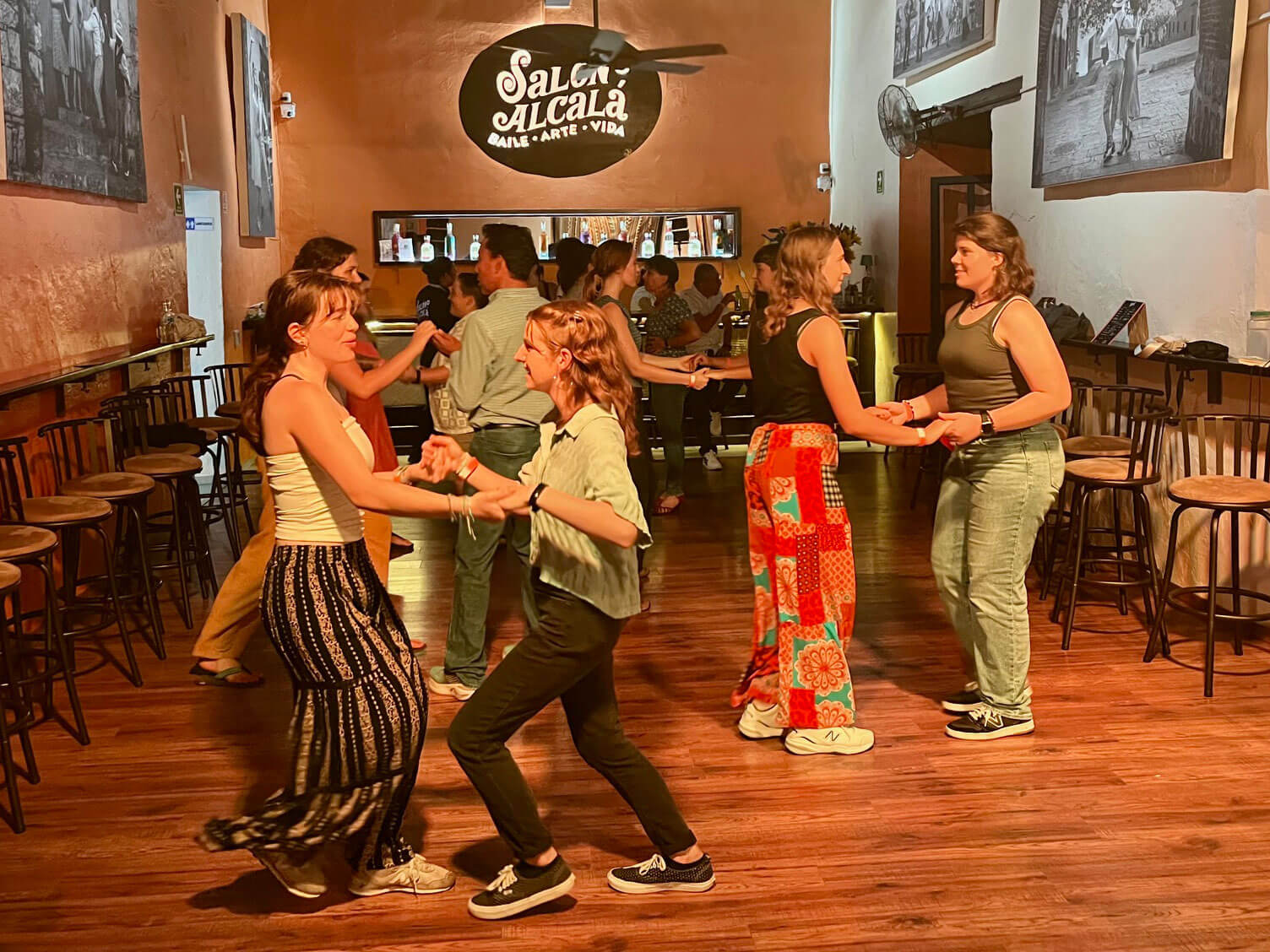
Salón Alcalá: Baile, Arte, Vida